I remember my own math classes — more dread than wonder, formulas copied down without ever asking
why, the quiet hope that the teacher wouldn’t call on me. So when I reminisce about the MYP Numeracy
Week 2026, I wasn’t expecting to feel surprised by what I kept overhearing instead.
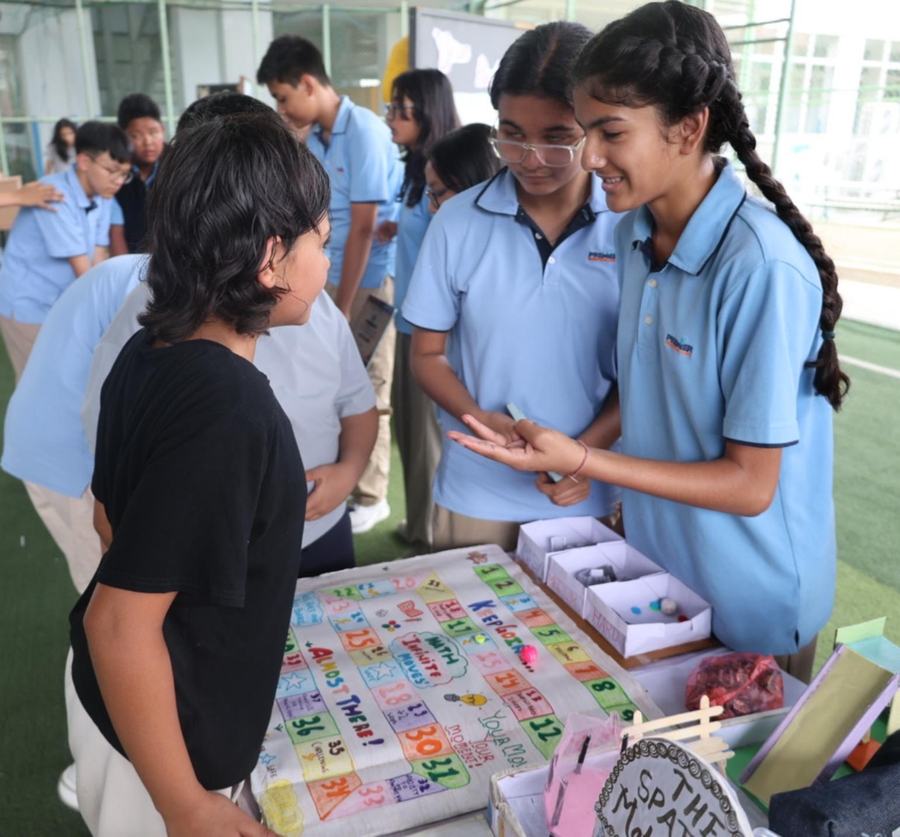
“Wait… this is math?” — a younger student, pointing at a music exhibit that didn’t look like math at all
“So doctors actually calculate this before prescribing medicine dosages?” said another student, leaning in
during an expert talk.
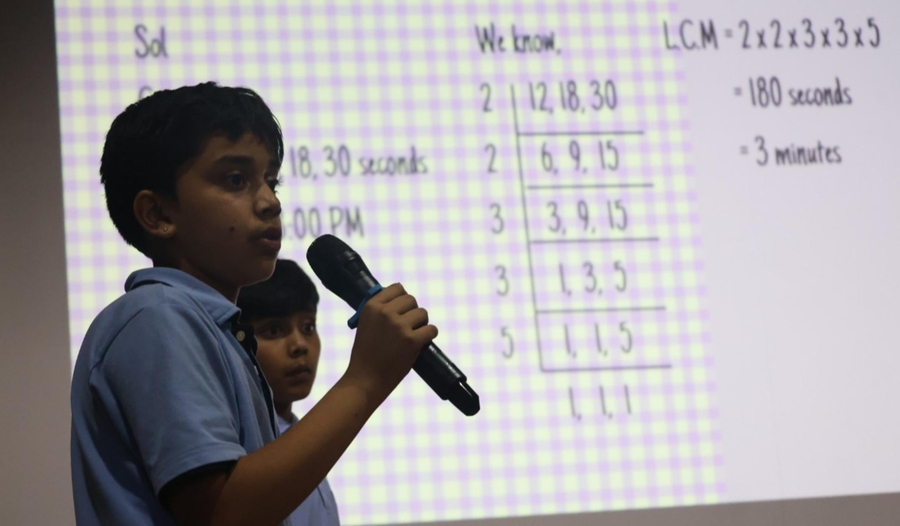
“Give me a harder one,” said a student, grinning, daring the math quizmaster to stump him.
“Ohh, so this is how the government actually decides stuff?” said a student, mid-debate, suddenly
forgetting he was supposed to be performing an argument and not just having one.
There’s a boy I keep thinking about, who had built a calculator that wasn’t supposed to exist. Not the kind
you buy, but one made from scratch out of switches and wire, the kind that only understands the world in
ones and zeros. A younger student stopped at his table and asked him how it worked.
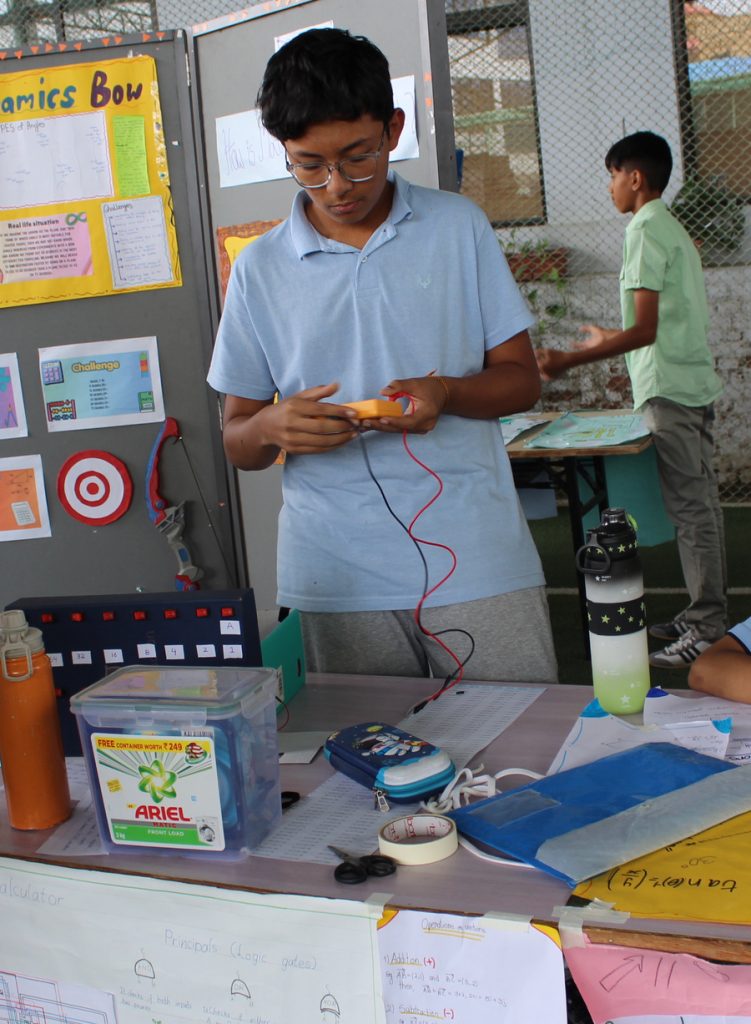
He didn’t just answer. He started explaining that the phones we carry around, underneath everything, do
the same thing his switches were doing, just faster and smaller. That computer science wasn’t a separate
universe from math class. It was math, wearing a different coat.
I watched the younger boy’s face change. That’s not how math class usually goes. Math class is supposed
to be the subject where you calculate the answer, not the one where someone hands you a better question
At the far end of the hall, students worked through a string of real-world problems, one harder than the
last, no clean finish line in sight. A girl plotted a flight path, then had to recalculate it mid-way when her
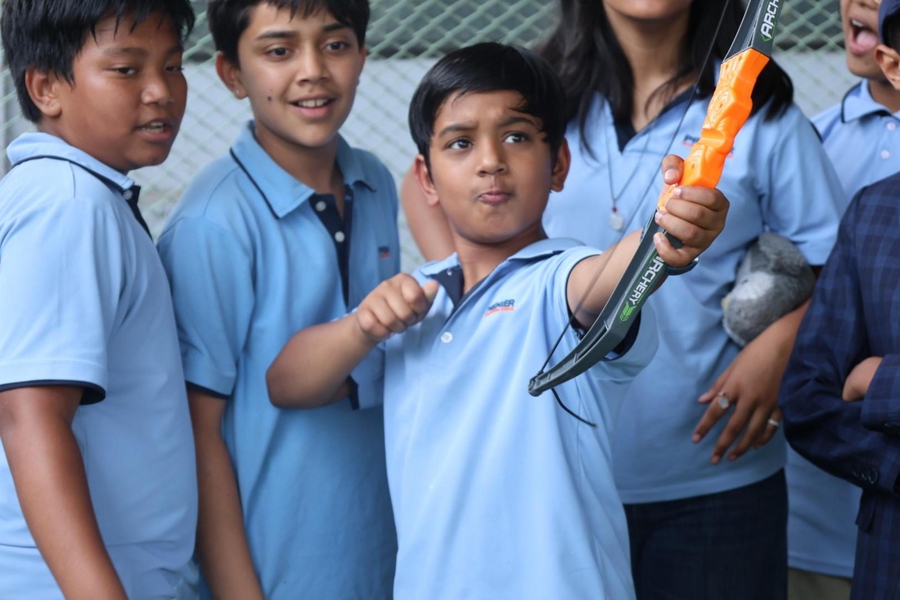
partner quietly changed one number. A boy stopped, mid-problem, to ask whether archers actually
calculate trajectory before releasing an arrow. Before anyone could answer, he worked it out himself on
the back of his sheet, just to check
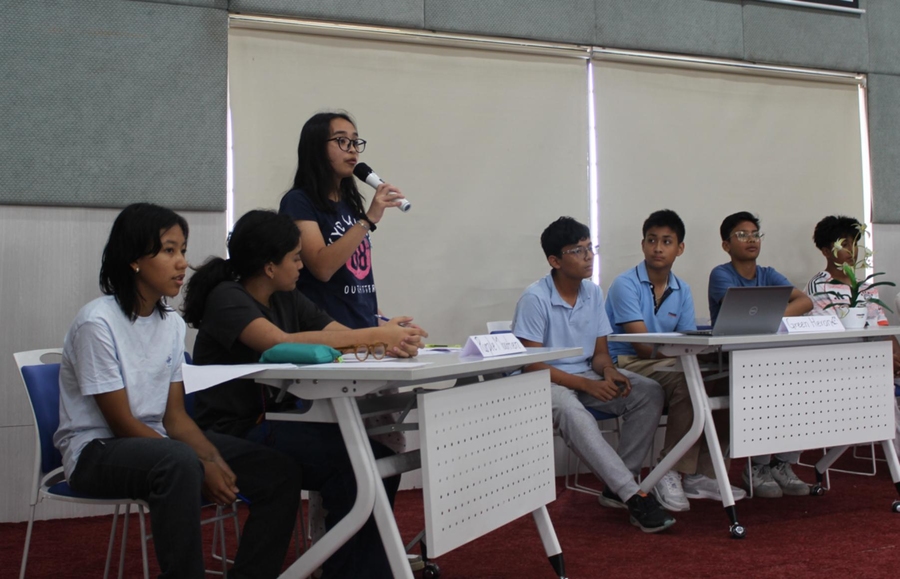
The debate room had a group of students mid-argument – not the rehearsed kind, the real kind, the kind
where someone forgets they’re supposed to be performing a position and just believes it. One boy stopped
mid-sentence to quote, “Wait, so this is how the government actually decides this stuff?” Nobody had told
him that was the point. He figured it out on his own.
I’ve worked in this department long enough to know the script everyone arrives with. Ask any room full
of adults to finish the sentence “Mathematics is…” and most will say “difficult” or “hard” before they say
anything else. Somewhere between the formulas and the final exams, a subject built on curiosity got
rebranded as an obstacle. I’ve believed that script myself, on hard days.
But this week, I watched it crack. Not because anyone announced it would. It cracked in moments I
almost missed because I was busy walking past them — a boy explaining his own phone back to himself in
switches and wires, a flight path recalculated mid-air, a debate that stopped being a mere competition
There’s an old Sanskrit verse I found myself returning to that week:
“यथा शखा मयूराणां नागानां मणयो यथा । तद् वद् वेदाङ् गशास्त्र ाणां गणतं मूधन िस् थतम् ।।”
It translates to: ‘Just as the peacock is crowned by its crest, and the serpent adorned by its jewel,
mathematics sits at the crown of all knowledge.’
It’s a striking claim to make to a room full of teenagers who’ve spent years thinking of math as the subject
that makes them feel a sense of dread or fear. But that’s exactly the gap I watched close that week – not
because people kept reiterating that math was important, but because they caught it in the act of being
important, in places they didn’t expect to find it.
By the end of the week, the question that usually haunts a math classroom, ” Where will I ever use this?”,
had quietly answered itself. Not with a lecture, but with a boy who rebuilt his calculator out of switches
and wire, a flight path that had to be recalculated mid-air, and a student who walked out asking why no
one had told him sooner that a government budget is just math with consequences – the same math, it
turns out, that decides how much medicine a doctor is allowed to give.
Nobody had to convince these students anymore since they had already built their own proofs.
Mathematics is not difficult. It is everywhere. You just have to be standing in the right room to
notice.
Compiled by
MYP Mathematics Department
Premier International IB Continuum School